About this artwork
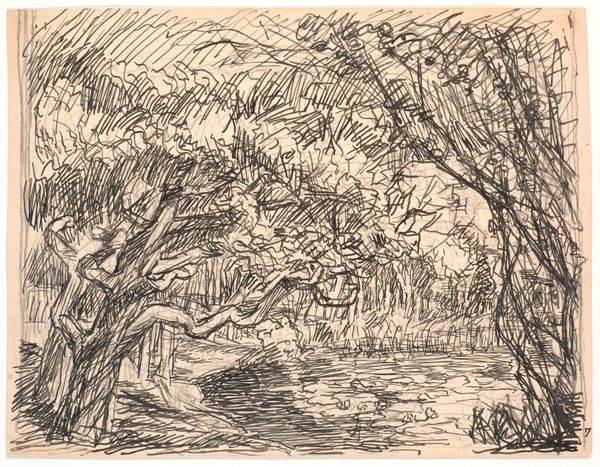
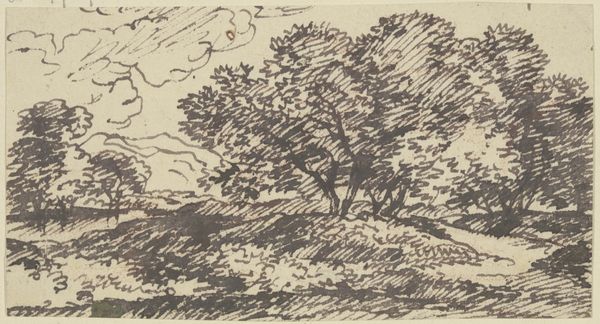
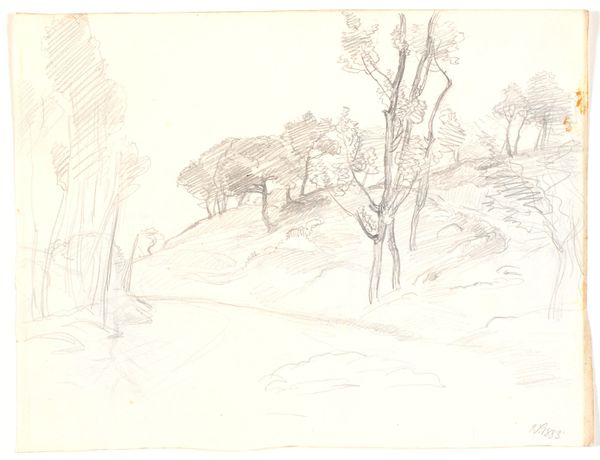
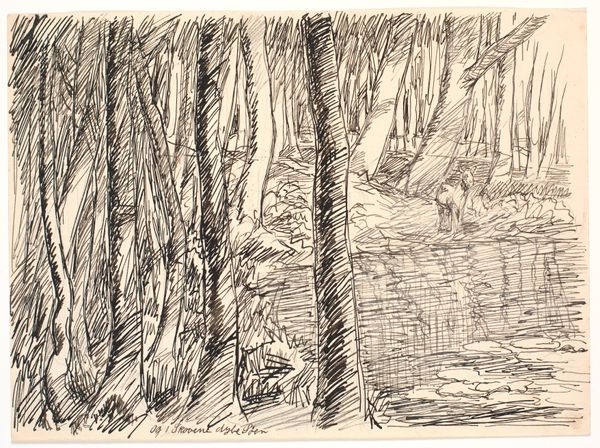
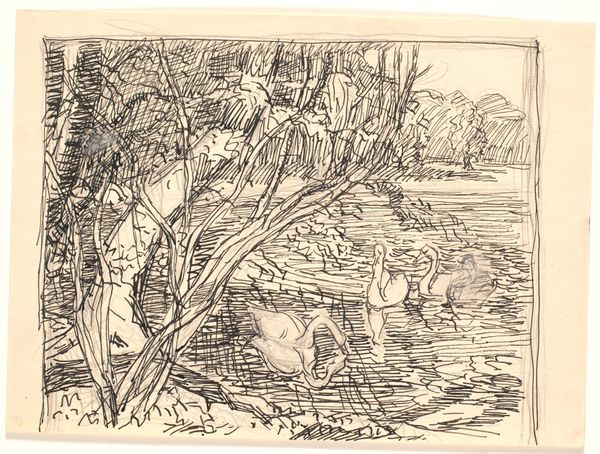
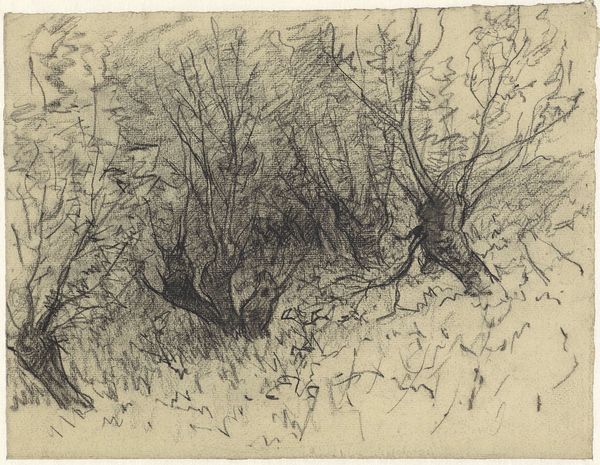
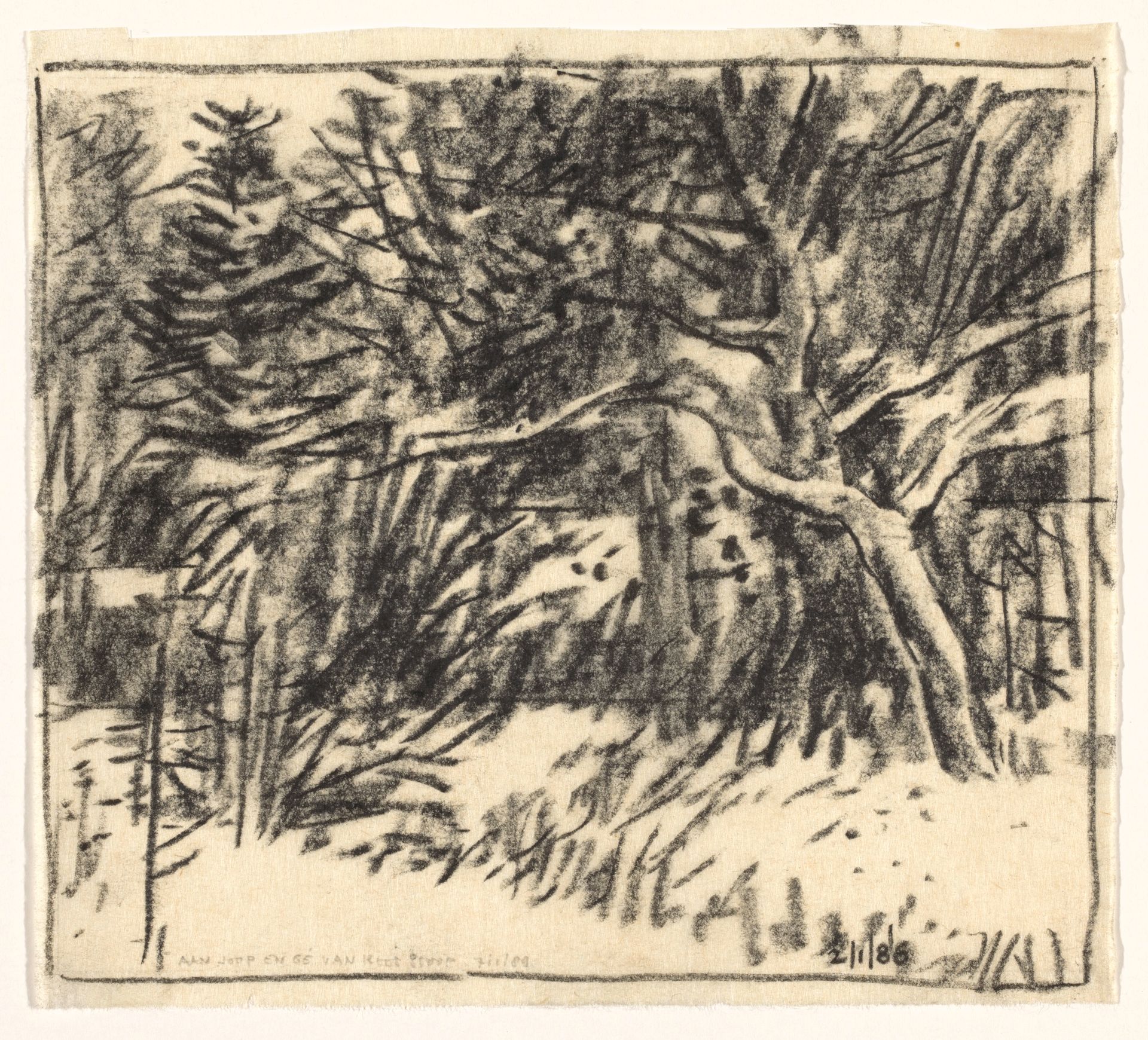
Editor: We're looking at Kees Stoop's "Struikgewas en geboomte," possibly from 1986, a landscape drawing rendered in graphite. It feels immediate and a bit raw, focusing on the textures of the trees and undergrowth. What strikes you about it? Curator: What's most interesting to me is the labor evident in this work. Consider the act of repeatedly applying graphite to paper, a readily available material. It blurs the lines between artistic creation and manual task. Does it feel almost like documentation to you? Editor: Documentation? In what sense? Curator: The repeated marks, the close observation of the natural forms…It feels less like idealization and more like a record of a specific place and time. Think about Stoop’s choice of graphite - its accessibility implies a democratic approach to artmaking, where value lies in the action, not necessarily in the preciousness of materials. Do you get the sense of someone at work here? Editor: Definitely, especially with the almost frenetic energy in the shading. So, you’re suggesting the value comes from Stoop's process and the labor, which demystifies traditional notions of artistic genius? Curator: Exactly! We see how the means of production shapes the meaning. It moves beyond just representation, highlighting the inherent social dimensions of even the simplest landscape. Editor: That makes me look at the drawing in a totally different light, noticing the mark-making as almost more important than the trees themselves! Curator: Yes, that is correct. Now, I wonder what this would have felt like to the artist. Thank you for helping bring awareness to what materials tell us!

Artwork details
- Medium
- drawing, graphite
- Dimensions
- height 225 mm, width 249 mm
- Location
- Rijksmuseum
- Copyright
- Rijks Museum: Open Domain
Tags
drawing
landscape
graphite
realism
Comments
No comments
About this artwork
Editor: We're looking at Kees Stoop's "Struikgewas en geboomte," possibly from 1986, a landscape drawing rendered in graphite. It feels immediate and a bit raw, focusing on the textures of the trees and undergrowth. What strikes you about it? Curator: What's most interesting to me is the labor evident in this work. Consider the act of repeatedly applying graphite to paper, a readily available material. It blurs the lines between artistic creation and manual task. Does it feel almost like documentation to you? Editor: Documentation? In what sense? Curator: The repeated marks, the close observation of the natural forms…It feels less like idealization and more like a record of a specific place and time. Think about Stoop’s choice of graphite - its accessibility implies a democratic approach to artmaking, where value lies in the action, not necessarily in the preciousness of materials. Do you get the sense of someone at work here? Editor: Definitely, especially with the almost frenetic energy in the shading. So, you’re suggesting the value comes from Stoop's process and the labor, which demystifies traditional notions of artistic genius? Curator: Exactly! We see how the means of production shapes the meaning. It moves beyond just representation, highlighting the inherent social dimensions of even the simplest landscape. Editor: That makes me look at the drawing in a totally different light, noticing the mark-making as almost more important than the trees themselves! Curator: Yes, that is correct. Now, I wonder what this would have felt like to the artist. Thank you for helping bring awareness to what materials tell us!
Comments
No comments