About this artwork
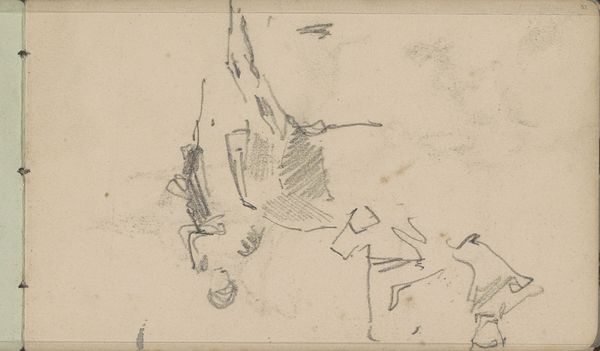
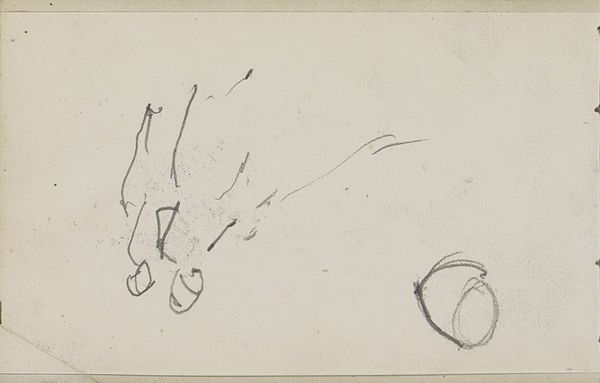
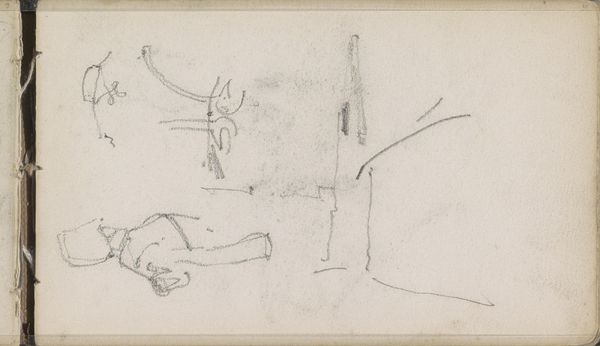
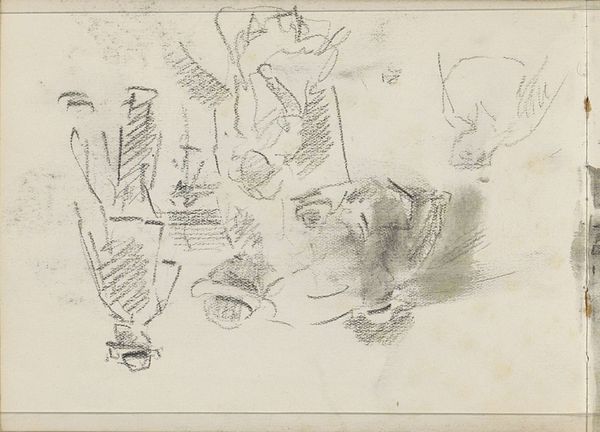
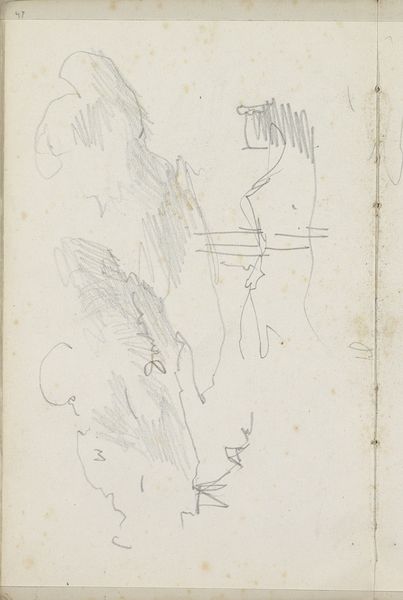
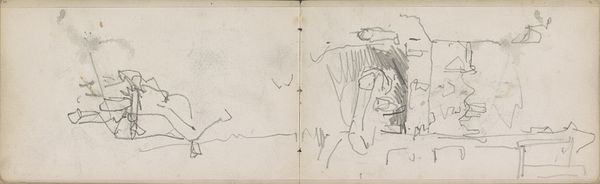
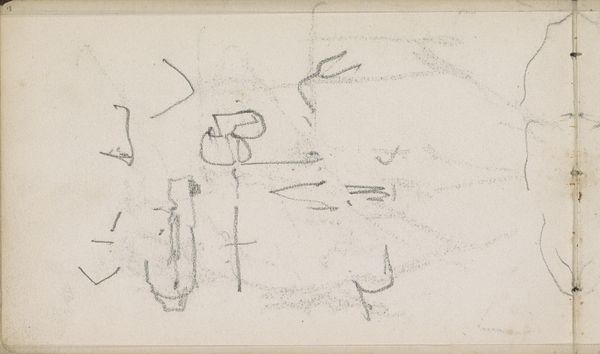
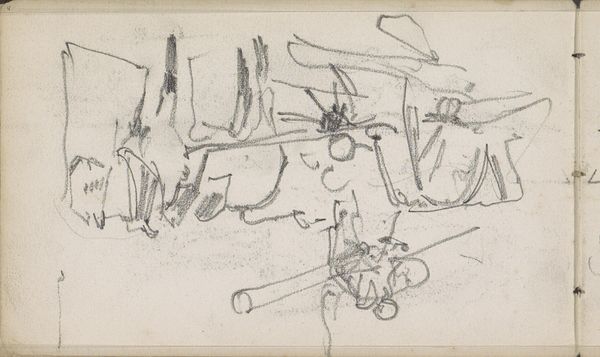
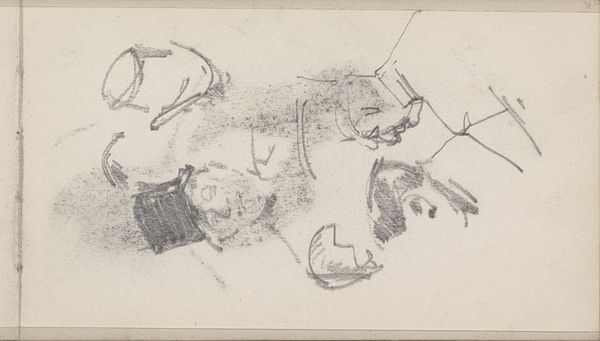
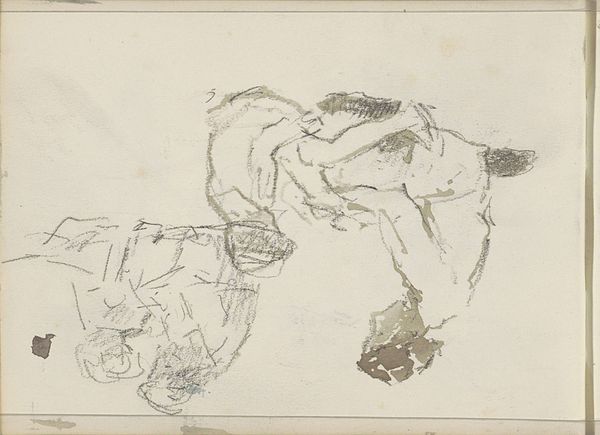
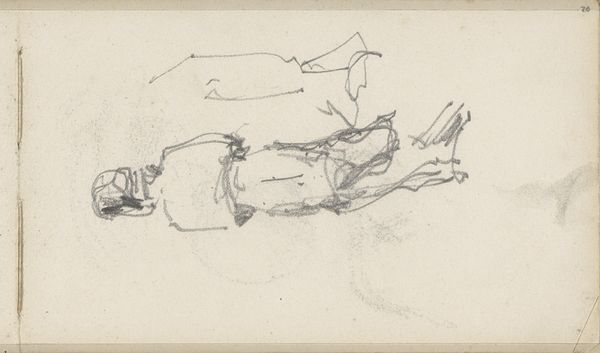
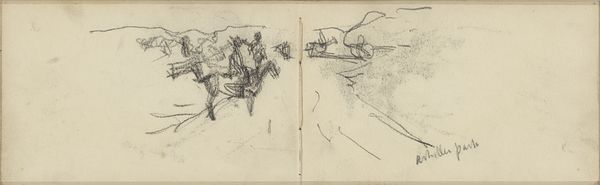
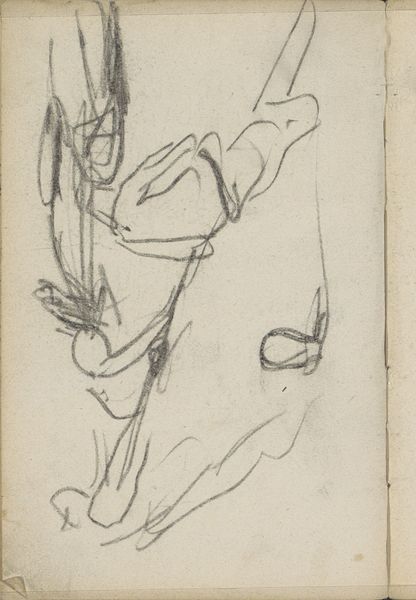
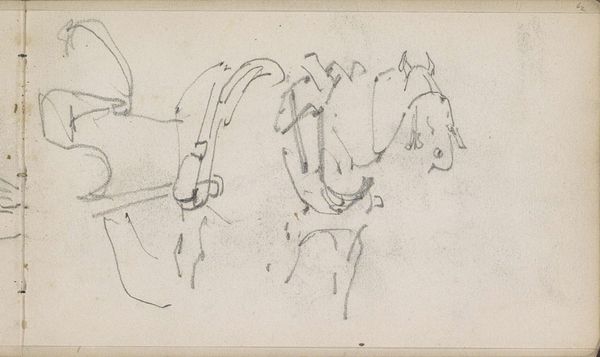
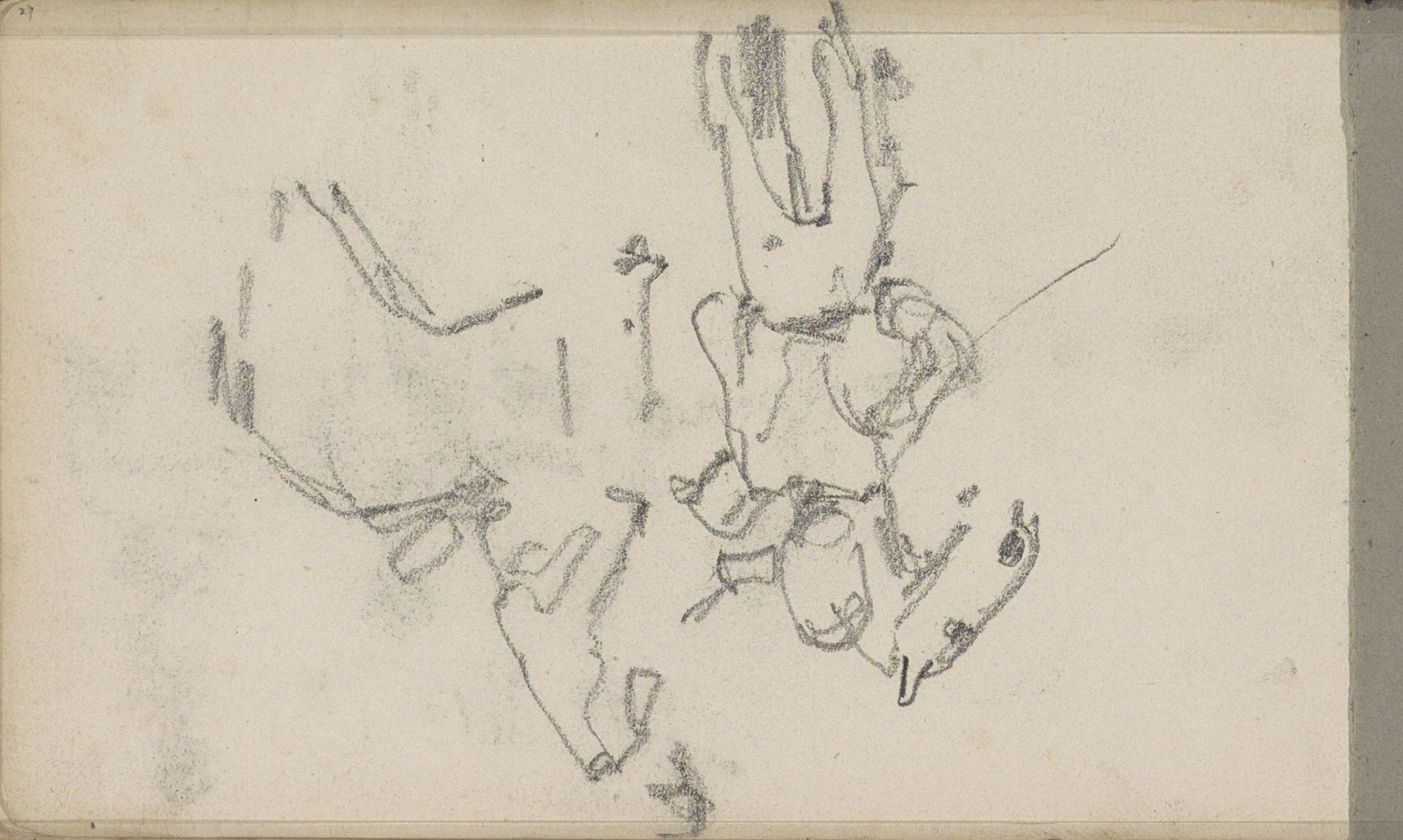
George Hendrik Breitner made this sketch, "Militair bij een ruiter, mogelijk cavaleristen" at an unknown date, using graphite on paper. The starkness of the gray lines against the muted background immediately conveys a sense of immediacy, capturing a fleeting moment with sparse detail. Breitner's formal approach here is compelling; rather than illustrating a scene, he constructs a series of lines to suggest forms. The composition destabilizes traditional notions of representation by focusing on the essential elements needed to convey the impression of soldiers and horses, almost deconstructing the figures into abstract shapes. This sparseness challenges fixed meanings, inviting us to consider how little is needed to evoke recognition and narrative. The sketch becomes a site where perception itself is questioned, reflecting a broader artistic concern with the nature of seeing and representing. It is a testament to how line alone can carry the weight of cultural and historical context.
Militair bij een ruiter, mogelijk cavaleristen
1881 - 1883

George Hendrik Breitner
1857 - 1923Location
RijksmuseumArtwork details
- Medium
- drawing, pencil
- Location
- Rijksmuseum
- Copyright
- Rijks Museum: Open Domain
Tags
drawing
impressionism
pen sketch
landscape
figuration
pencil
Comments
Be the first to share your thoughts about this work.
About this artwork
George Hendrik Breitner made this sketch, "Militair bij een ruiter, mogelijk cavaleristen" at an unknown date, using graphite on paper. The starkness of the gray lines against the muted background immediately conveys a sense of immediacy, capturing a fleeting moment with sparse detail. Breitner's formal approach here is compelling; rather than illustrating a scene, he constructs a series of lines to suggest forms. The composition destabilizes traditional notions of representation by focusing on the essential elements needed to convey the impression of soldiers and horses, almost deconstructing the figures into abstract shapes. This sparseness challenges fixed meanings, inviting us to consider how little is needed to evoke recognition and narrative. The sketch becomes a site where perception itself is questioned, reflecting a broader artistic concern with the nature of seeing and representing. It is a testament to how line alone can carry the weight of cultural and historical context.
Comments
Be the first to share your thoughts about this work.