About this artwork
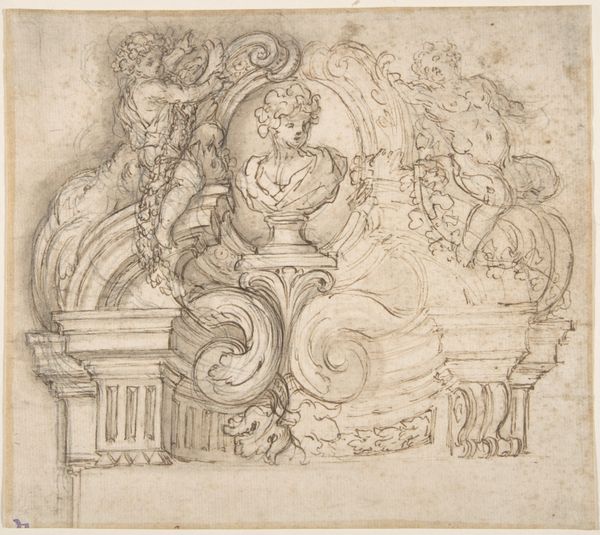
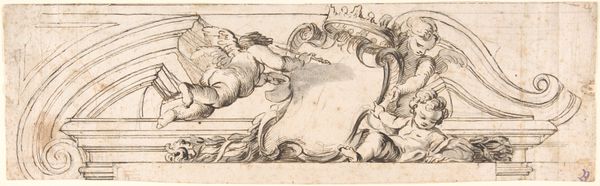
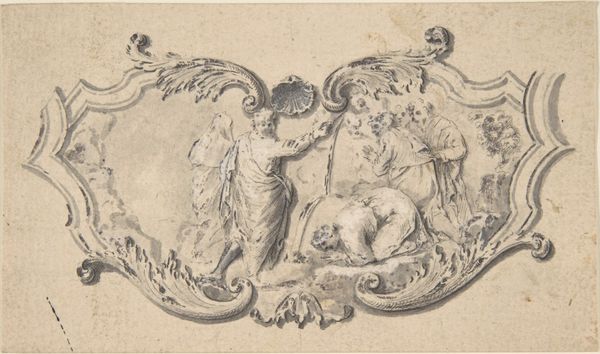
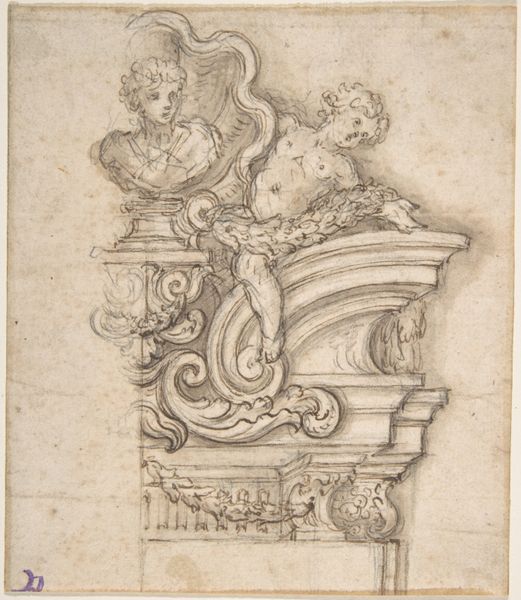
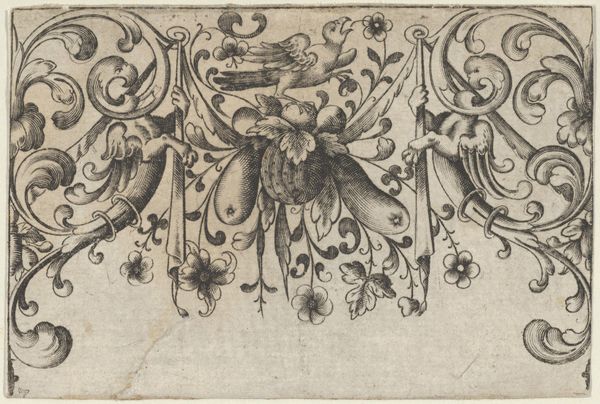
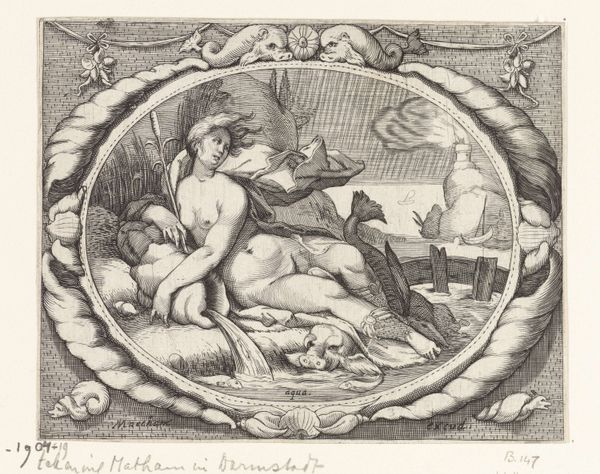
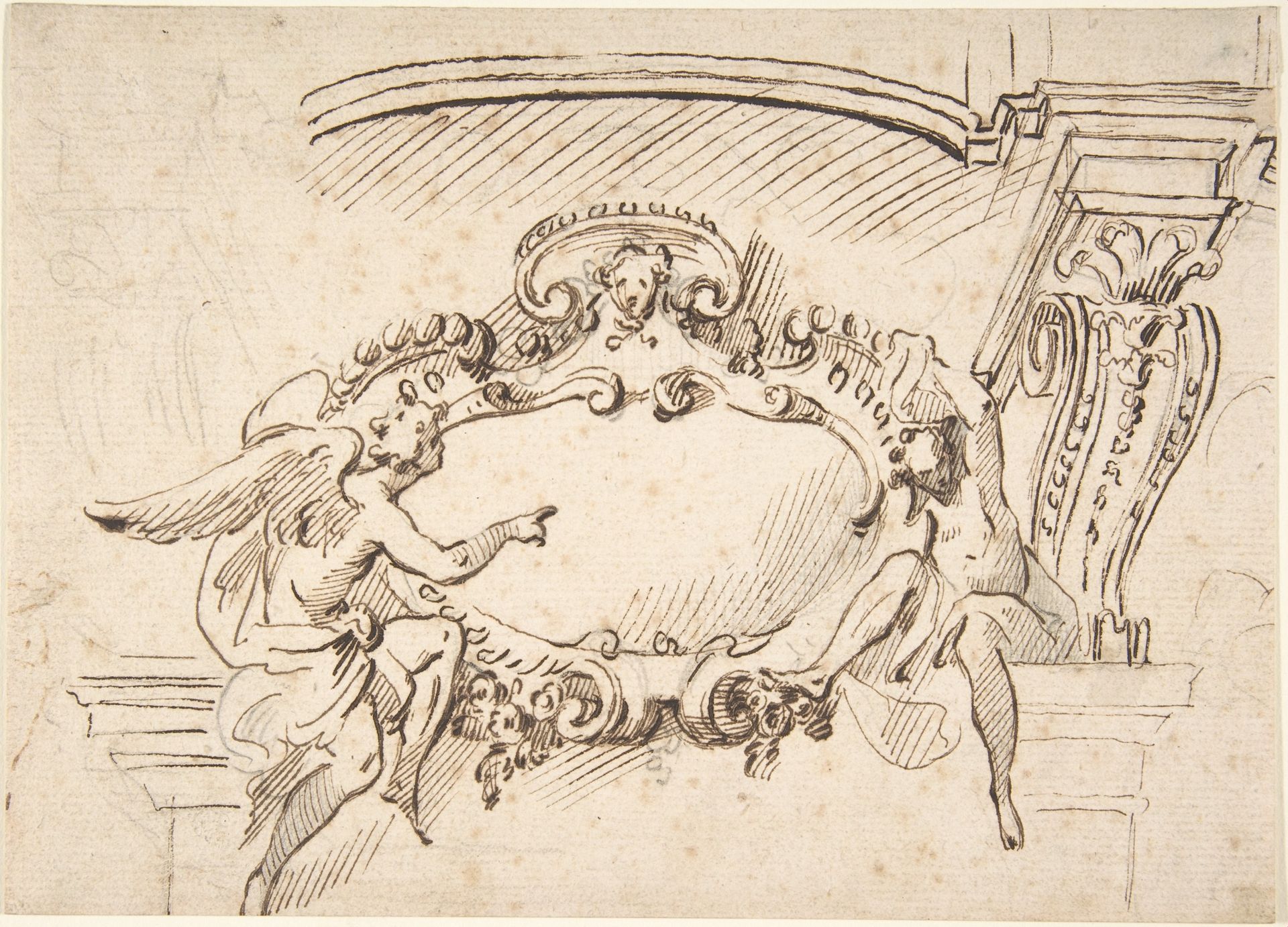
This pen and brown ink drawing depicts a design with a cartouche, made by an anonymous artist. Cartouches like this one were popular in Europe as decorative frames for inscriptions, coats of arms, or portraits. Here, we see the cartouche flanked by cherubic figures, one with wings, the other seated atop a classical column fragment. Architectural elements, such as the column and the suggestion of an arch above, indicate a concern with the proper ornamentation of buildings, likely somewhere in Europe. Though undated, its style and subject suggests this drawing probably comes from the 17th or 18th century, a time when the social status of patrons and institutions was often enhanced through elaborate architectural projects. We might consider the institutional context for which this design was intended. Was it for a church, a palace, or some other public building? Answering that question requires further research into the visual codes and the history of ornament. The interpretation of art is always contingent on the social and institutional context in which it was made.
Design with a Cartouche
19th century


Artwork details
- Medium
- drawing, ink, pen
- Dimensions
- 5 1/2 x 7 5/8 in. (13.9 x 19.3 cm)
- Location
- Metropolitan Museum of Art, New York, NY
- Copyright
- Public Domain
Tags
drawing
ink drawing
pen sketch
figuration
ink
geometric
pen
academic-art
Comments
Be the first to share your thoughts about this work.
About this artwork
This pen and brown ink drawing depicts a design with a cartouche, made by an anonymous artist. Cartouches like this one were popular in Europe as decorative frames for inscriptions, coats of arms, or portraits. Here, we see the cartouche flanked by cherubic figures, one with wings, the other seated atop a classical column fragment. Architectural elements, such as the column and the suggestion of an arch above, indicate a concern with the proper ornamentation of buildings, likely somewhere in Europe. Though undated, its style and subject suggests this drawing probably comes from the 17th or 18th century, a time when the social status of patrons and institutions was often enhanced through elaborate architectural projects. We might consider the institutional context for which this design was intended. Was it for a church, a palace, or some other public building? Answering that question requires further research into the visual codes and the history of ornament. The interpretation of art is always contingent on the social and institutional context in which it was made.
Comments
Be the first to share your thoughts about this work.