About this artwork
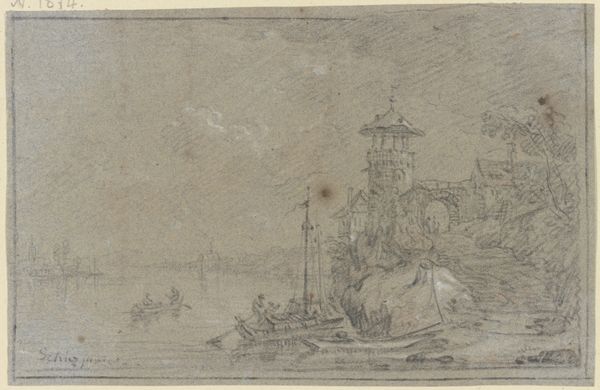
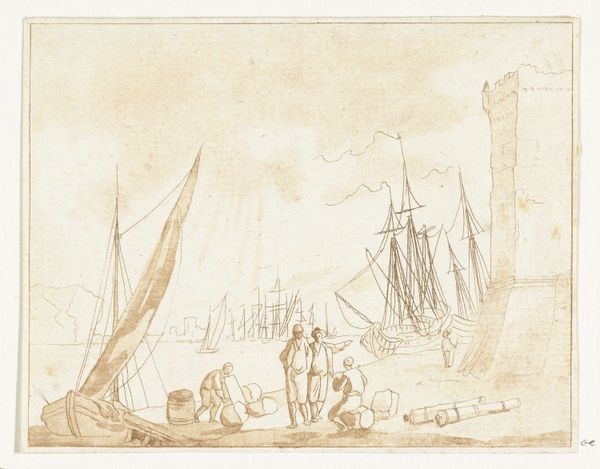
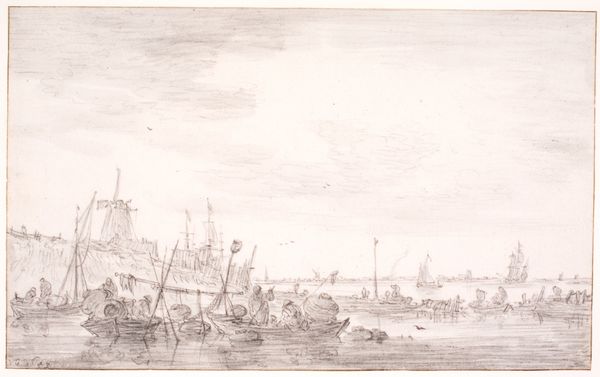
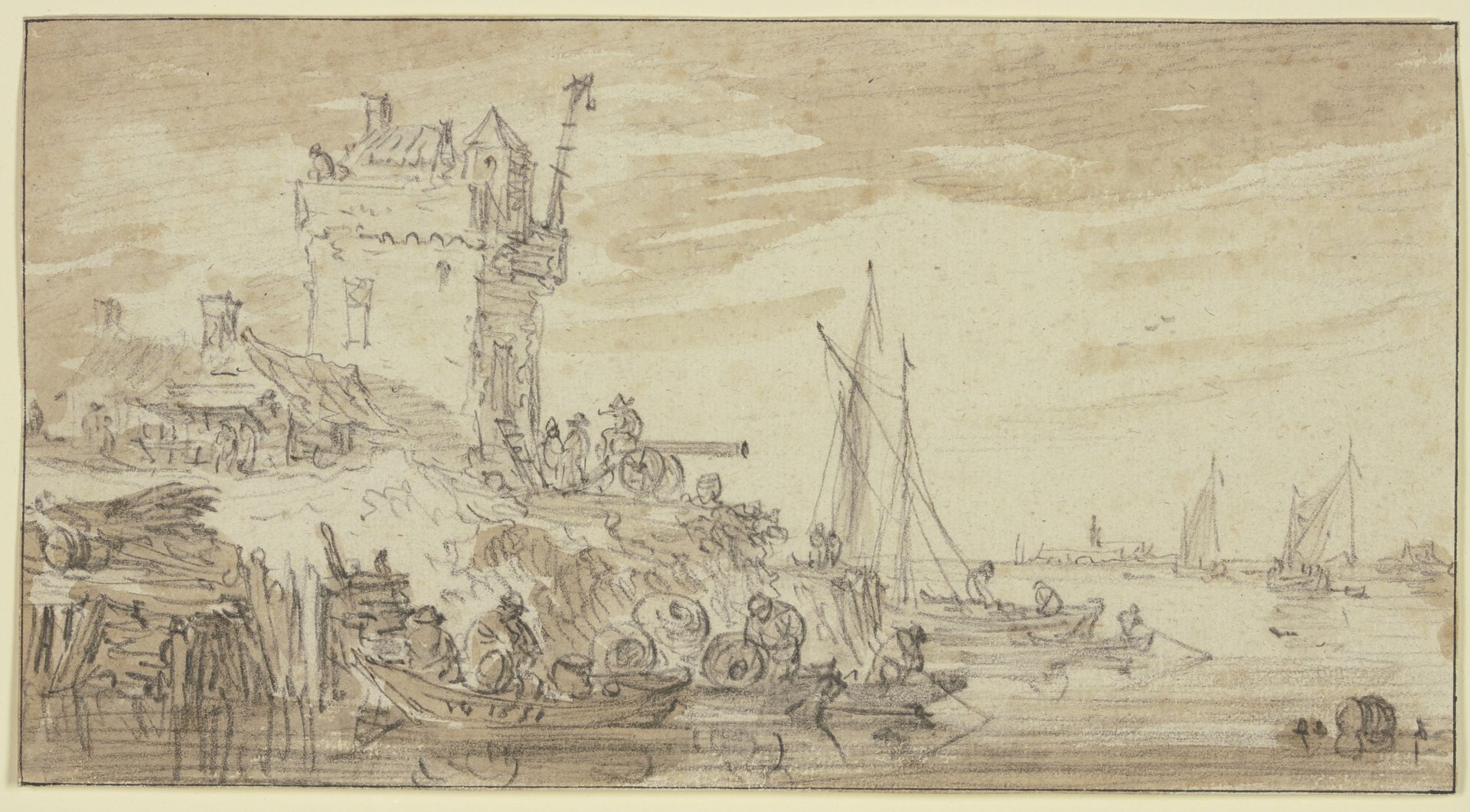
Jan van Goyen made this drawing with pen in brown on brownish paper, depicting a fortified tower by a river. In the 17th-century Dutch Republic, art became a commodity, traded in open markets and collected by a wide spectrum of society. Van Goyen was one of the most productive landscape painters, responding to a demand for images of local scenes. Here, a fortified tower stands by a busy river, a scene that evokes the economic and military power of the Dutch Republic. How does this image create meaning? The river bustles with trade, while the tower and cannon signal military might. The scene encapsulates the intertwined nature of commerce and defense in the Netherlands during its Golden Age. Understanding such art requires us to consider the economic structures, social relations, and military technologies of the time. Art historians consult archival sources, maps, and other period documents to reconstruct the world that produced these images. Art, after all, does not exist in a vacuum, but reflects the conditions of its making.
Links an einem Fluss ein befestigter Turm, dabei eine Kanone auf welcher ein Mann sitzt
1651


Artwork details
- Medium
- drawing, ink, pen
- Location
- Städel Museum
- Copyright
- Public Domain
Tags
Comments
Share your thoughts
About this artwork
Jan van Goyen made this drawing with pen in brown on brownish paper, depicting a fortified tower by a river. In the 17th-century Dutch Republic, art became a commodity, traded in open markets and collected by a wide spectrum of society. Van Goyen was one of the most productive landscape painters, responding to a demand for images of local scenes. Here, a fortified tower stands by a busy river, a scene that evokes the economic and military power of the Dutch Republic. How does this image create meaning? The river bustles with trade, while the tower and cannon signal military might. The scene encapsulates the intertwined nature of commerce and defense in the Netherlands during its Golden Age. Understanding such art requires us to consider the economic structures, social relations, and military technologies of the time. Art historians consult archival sources, maps, and other period documents to reconstruct the world that produced these images. Art, after all, does not exist in a vacuum, but reflects the conditions of its making.
Comments
Share your thoughts