About this artwork
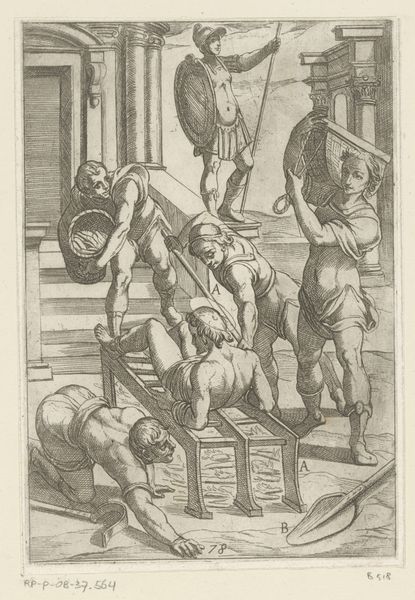
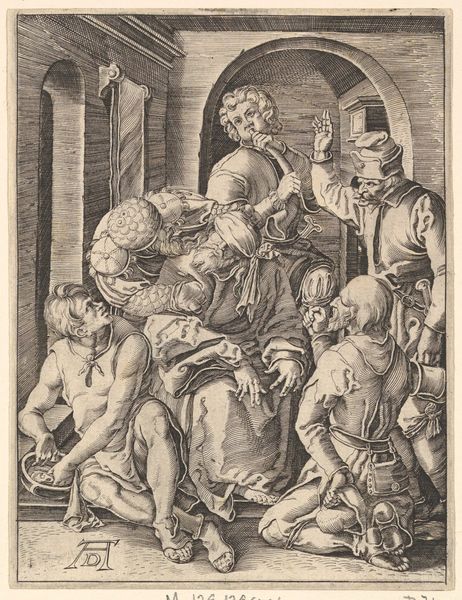
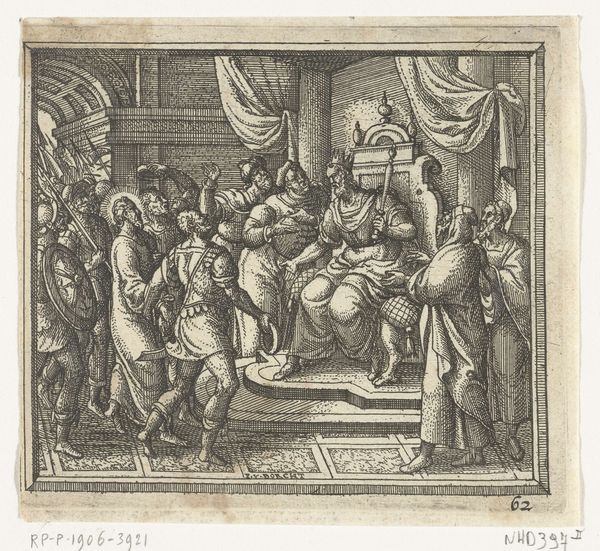
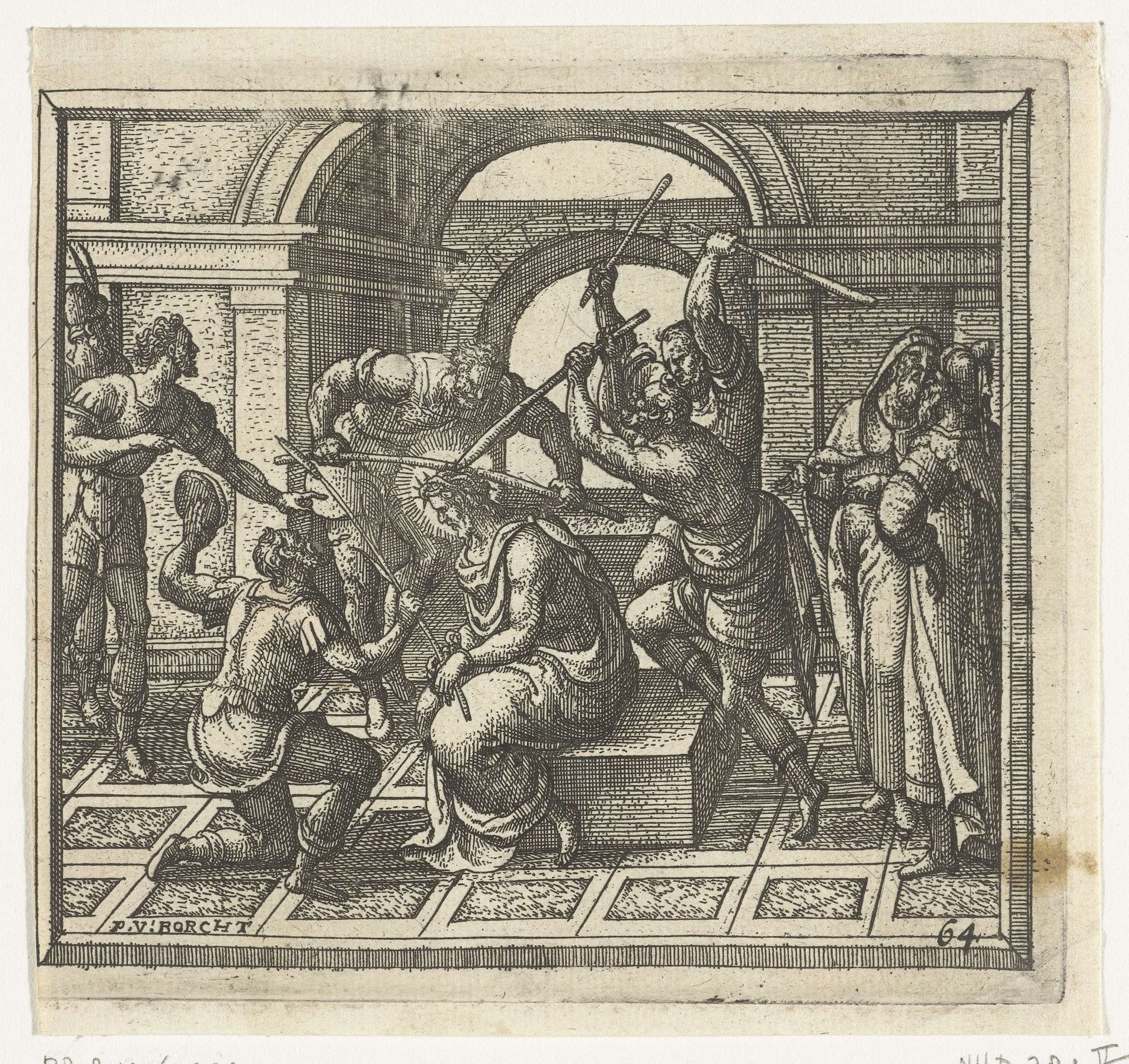
Pieter van der Borcht's engraving, titled "Christ Crowned and Beaten", captures a moment of intense religious and political significance. Made in the Netherlands during the late 16th century, this image reflects the religious tensions of the time, caught as it was between the authority of the Catholic Church and the rise of Protestantism. The brutal scene depicts Christ's suffering, a theme often used to evoke empathy and piety, but also to implicitly critique worldly power. The act of crowning Christ with thorns and striking him becomes a powerful commentary on the abuse of authority. As art historians, we can delve deeper into the cultural context of this piece, examining religious texts, political pamphlets, and the records of artistic patronage. This helps us understand not only the artist's intentions, but also how audiences might have interpreted this potent image.
Christus gekroond en geslagen Possibly 1582 - 1717

Pieter van der (I) Borcht
1545 - 1608Location
RijksmuseumArtwork details
- Medium
- print, intaglio, engraving
- Dimensions
- height 104 mm, width 119 mm
- Location
- Rijksmuseum
- Copyright
- Rijks Museum: Open Domain
Tags
narrative-art
intaglio
old engraving style
mannerism
figuration
personal sketchbook
history-painting
engraving
Comments
No comments
About this artwork
Pieter van der Borcht's engraving, titled "Christ Crowned and Beaten", captures a moment of intense religious and political significance. Made in the Netherlands during the late 16th century, this image reflects the religious tensions of the time, caught as it was between the authority of the Catholic Church and the rise of Protestantism. The brutal scene depicts Christ's suffering, a theme often used to evoke empathy and piety, but also to implicitly critique worldly power. The act of crowning Christ with thorns and striking him becomes a powerful commentary on the abuse of authority. As art historians, we can delve deeper into the cultural context of this piece, examining religious texts, political pamphlets, and the records of artistic patronage. This helps us understand not only the artist's intentions, but also how audiences might have interpreted this potent image.
Comments
No comments