About this artwork
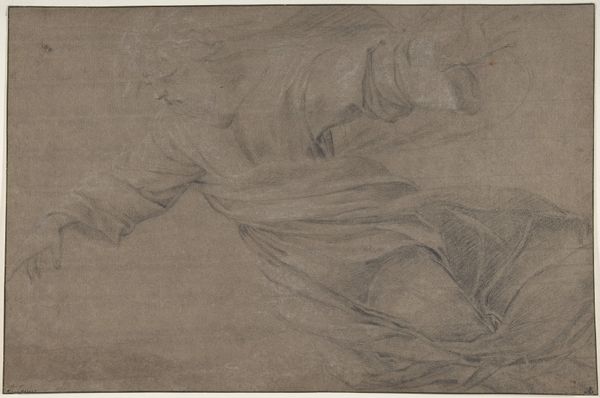
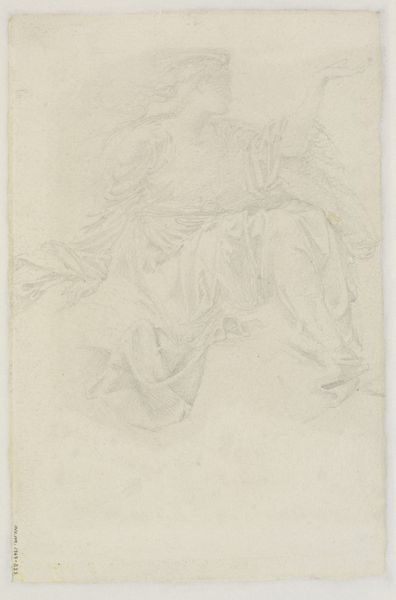
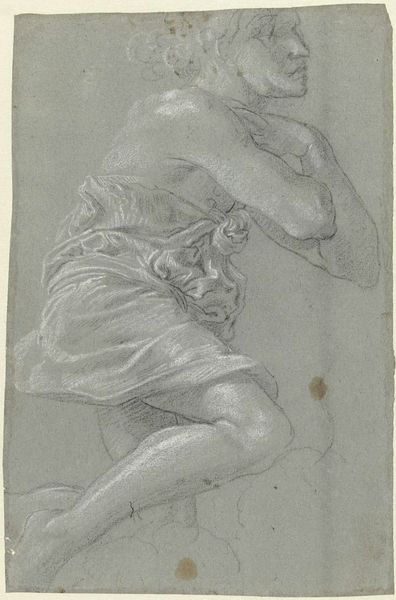
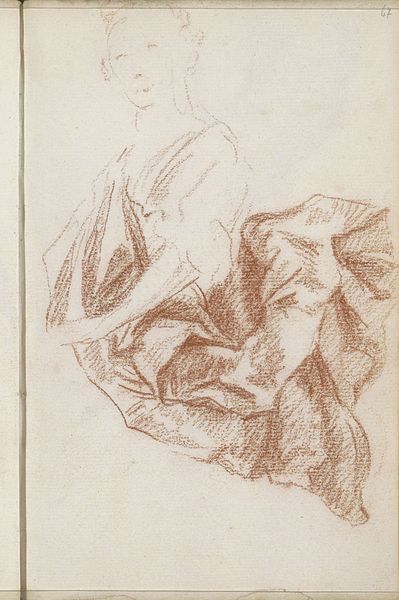
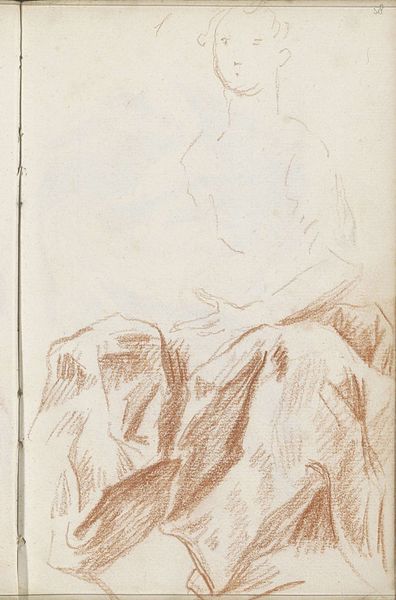
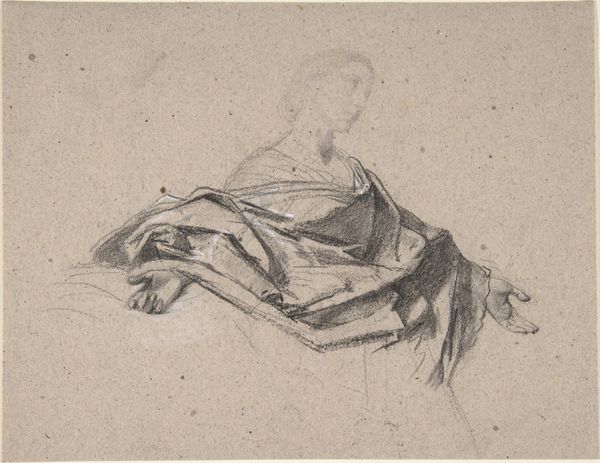
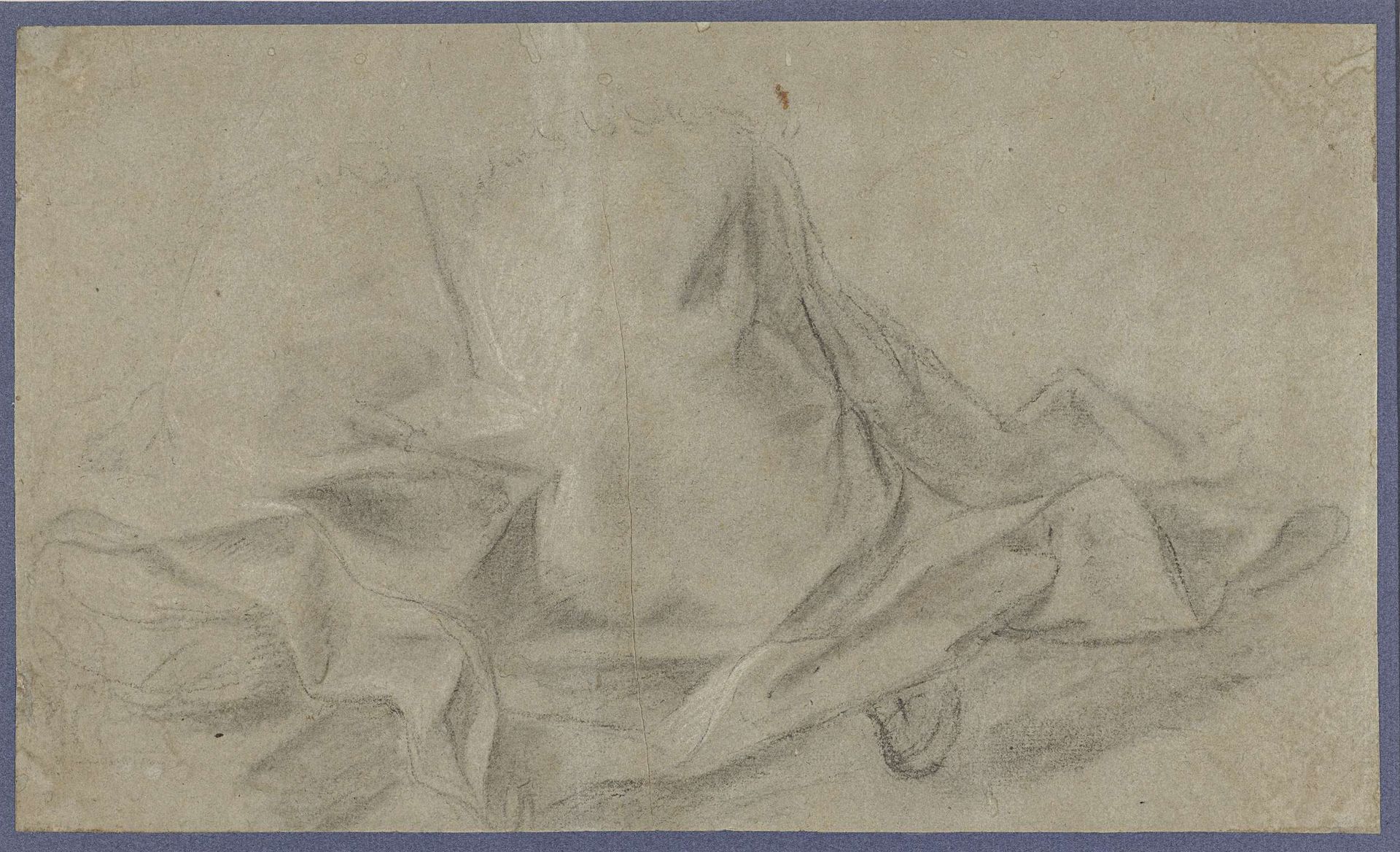
Giovanni Lanfranco made this drawing of a kneeling priest's robe using graphite. Notice how the composition directs your eye through a series of folds and shadows, creating a dynamic interplay of light and dark. The texture seems almost palpable due to the artist's delicate use of shading to define the fabric’s contours and depth. Lanfranco's attention to the fall of light and the tactile qualities of the cloth elevate the sketch beyond a mere study. Here, the fabric almost seems to have a life of its own. This approach destabilizes the traditional hierarchy in art, where the human form often takes precedence. Ultimately, the drawing challenges our perceptions of form and substance. It invites us to consider how simple graphite lines can capture the essence of texture and volume. It serves as an example of how close observation and technical skill can transform ordinary subjects into objects of aesthetic contemplation.
Schets voor het kleed van een knielende priester
1592 - 1647

Giovanni Lanfranco
1582 - 1647Location
RijksmuseumArtwork details
- Medium
- drawing, paper, dry-media, pencil
- Dimensions
- height 208 mm, width 350 mm
- Location
- Rijksmuseum
- Copyright
- Rijks Museum: Open Domain
Tags
pencil drawn
drawing
pencil sketch
figuration
paper
dry-media
pencil
italian-renaissance
Comments
Be the first to share your thoughts about this work.
About this artwork
Giovanni Lanfranco made this drawing of a kneeling priest's robe using graphite. Notice how the composition directs your eye through a series of folds and shadows, creating a dynamic interplay of light and dark. The texture seems almost palpable due to the artist's delicate use of shading to define the fabric’s contours and depth. Lanfranco's attention to the fall of light and the tactile qualities of the cloth elevate the sketch beyond a mere study. Here, the fabric almost seems to have a life of its own. This approach destabilizes the traditional hierarchy in art, where the human form often takes precedence. Ultimately, the drawing challenges our perceptions of form and substance. It invites us to consider how simple graphite lines can capture the essence of texture and volume. It serves as an example of how close observation and technical skill can transform ordinary subjects into objects of aesthetic contemplation.
Comments
Be the first to share your thoughts about this work.