About this artwork
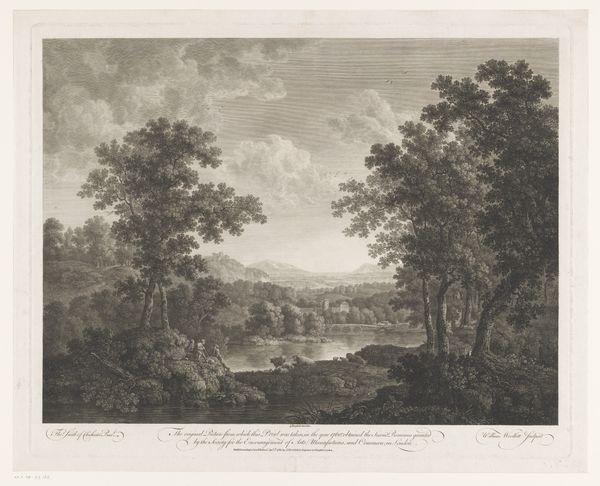
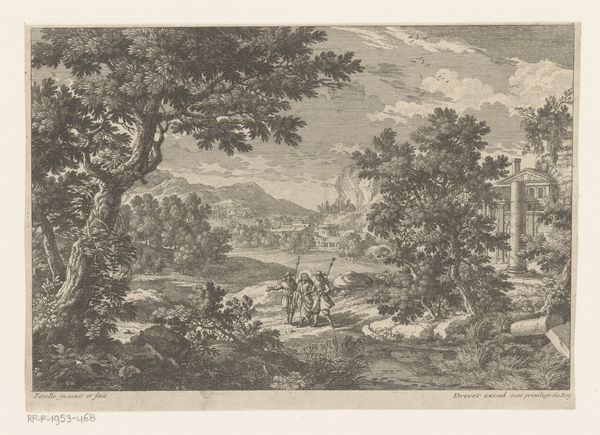
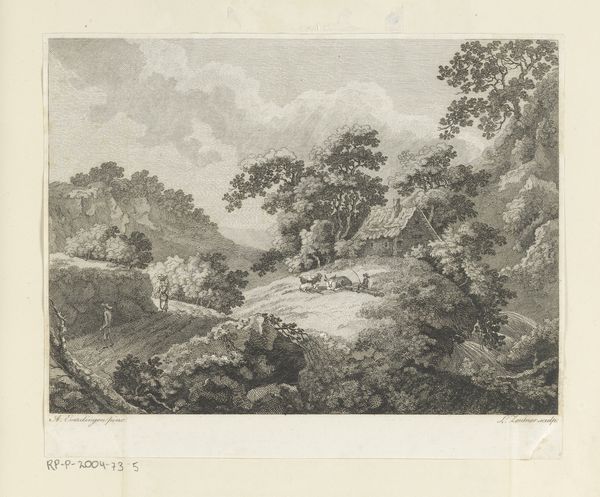
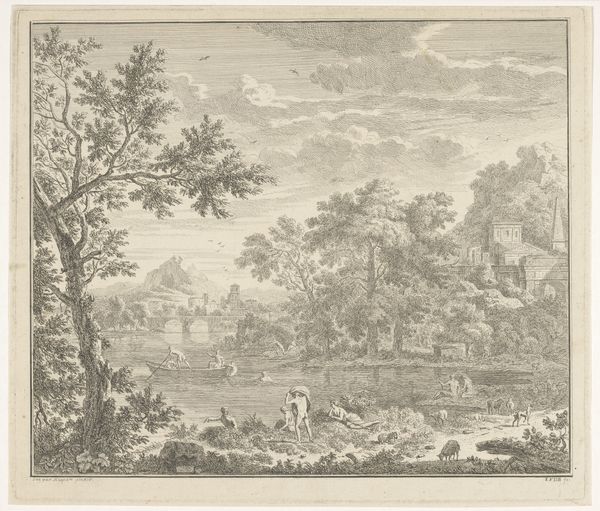
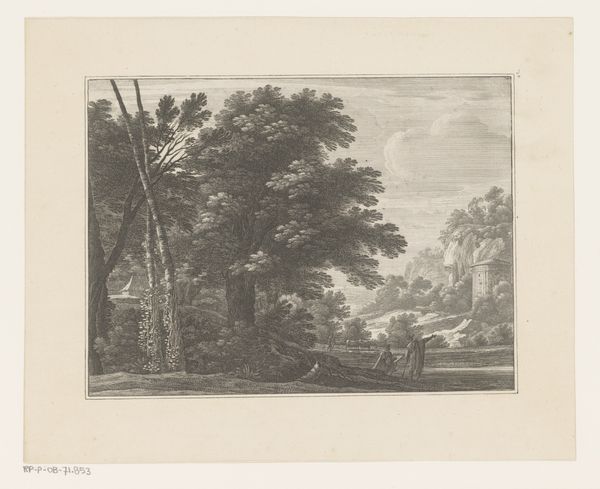
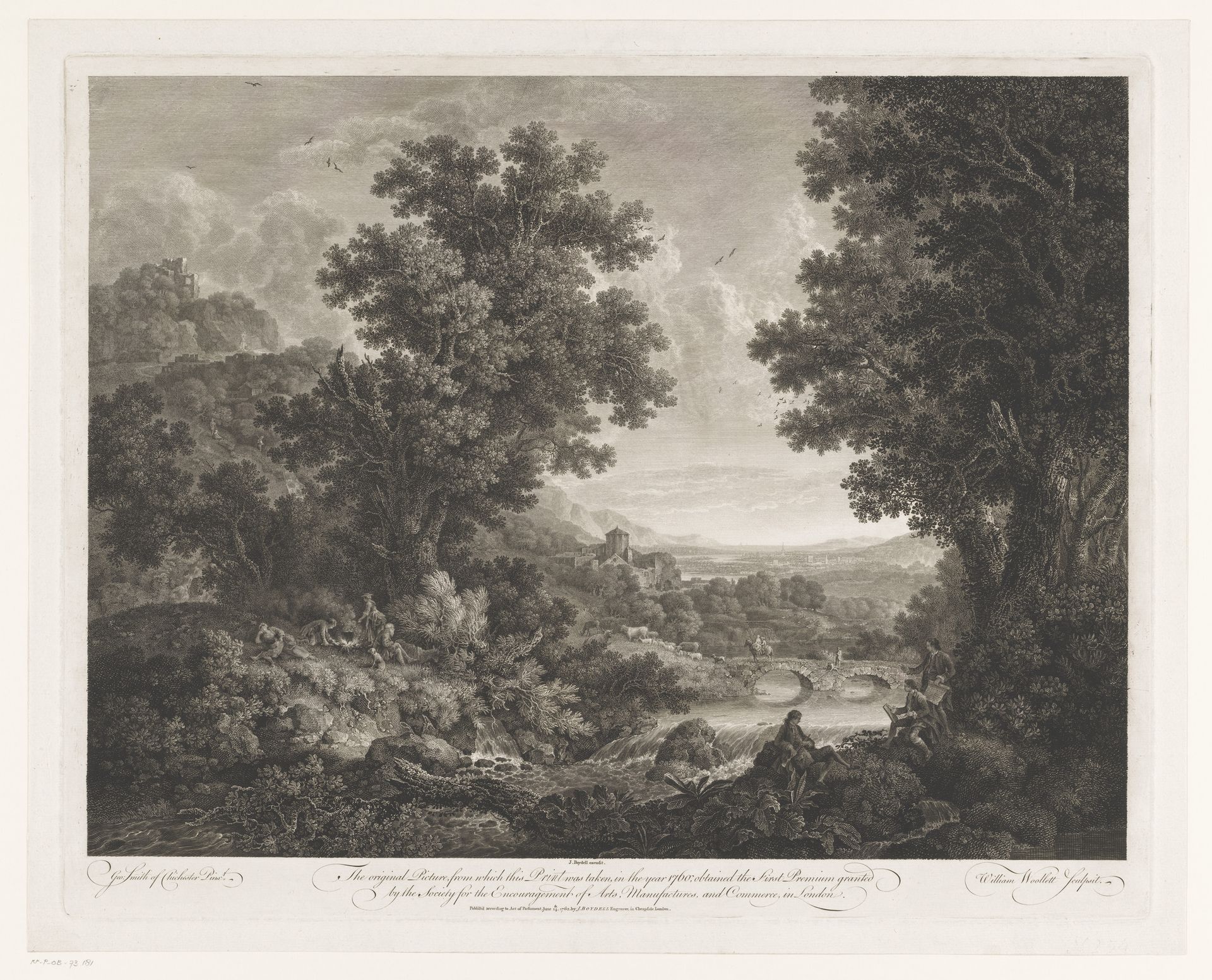
William Woollett created this landscape, now at the Rijksmuseum, using engraving techniques. Observe how the figures gather around a fire, echoing ancient communal rituals. Fire, a symbol of transformation and purification, appears across cultures, from the hearths of ancient Greece to the bonfires of pagan celebrations. The act of gathering, marked here by the fire, speaks to a deep, shared memory. This primal scene—a group united in the face of the unknown—reverberates through art history. Think of cave paintings depicting hunting parties around a flame, or Renaissance depictions of village feasts. Woollett seems to tap into something fundamentally human, portraying the comfort and unity found in shared light and warmth, a symbol that persists, ever-evolving, connecting us to our collective past.
Landschap met figuren rondom een vuur en tekenaar en schalmeispeler aan de oever van een rivier 1762 - 1766

William Woollett
1735 - 1785Location
RijksmuseumArtwork details
- Medium
- print, etching, engraving
- Dimensions
- height 479 mm, width 604 mm
- Location
- Rijksmuseum
- Copyright
- Rijks Museum: Open Domain
Tags
neoclacissism
etching
landscape
academic-art
engraving
Comments
No comments
About this artwork
William Woollett created this landscape, now at the Rijksmuseum, using engraving techniques. Observe how the figures gather around a fire, echoing ancient communal rituals. Fire, a symbol of transformation and purification, appears across cultures, from the hearths of ancient Greece to the bonfires of pagan celebrations. The act of gathering, marked here by the fire, speaks to a deep, shared memory. This primal scene—a group united in the face of the unknown—reverberates through art history. Think of cave paintings depicting hunting parties around a flame, or Renaissance depictions of village feasts. Woollett seems to tap into something fundamentally human, portraying the comfort and unity found in shared light and warmth, a symbol that persists, ever-evolving, connecting us to our collective past.
Comments
No comments