1769 - 1842
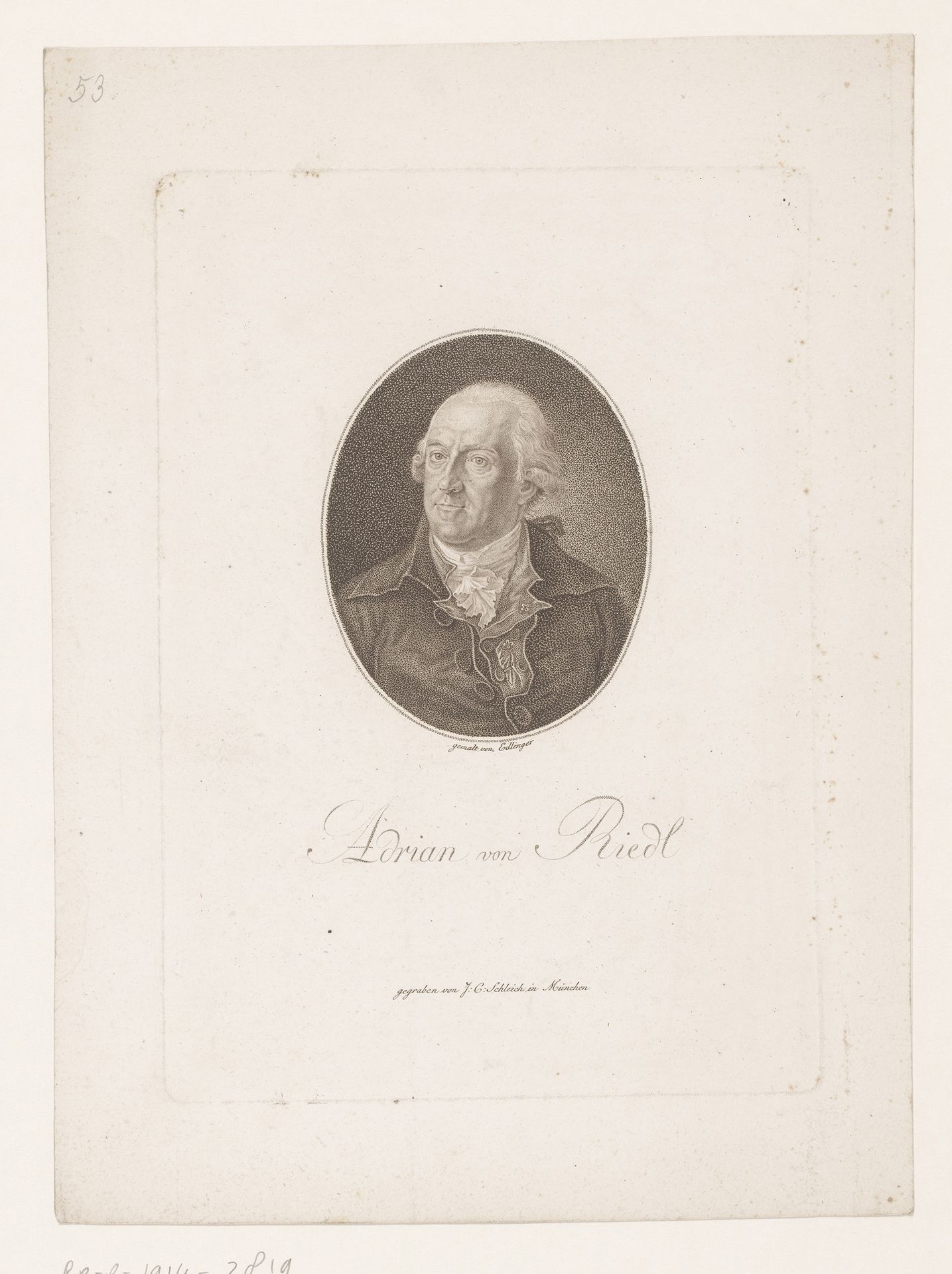
Portret van Adrian von Riedl

Johann Carl Schleich
1759 - 1842Location
RijksmuseumListen to curator's interpretation
Curatorial notes
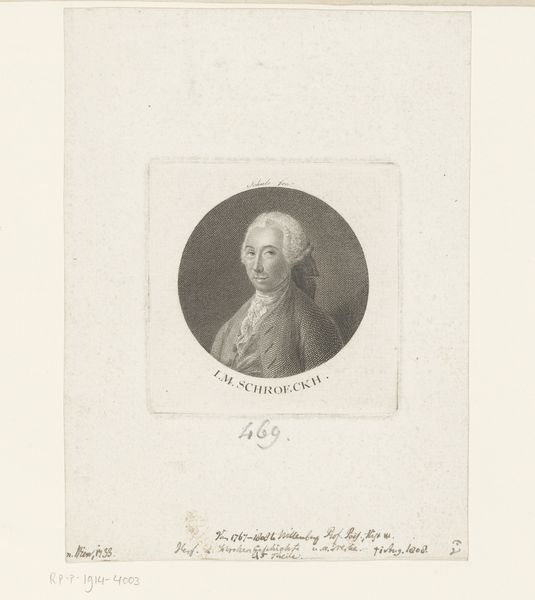
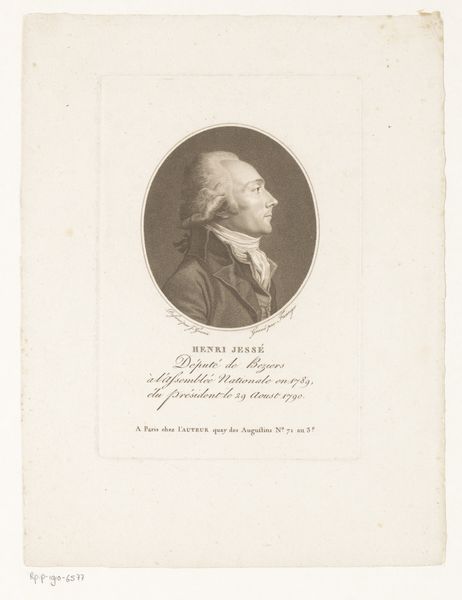
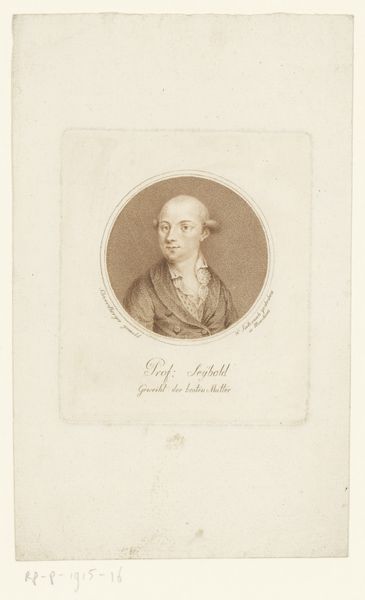
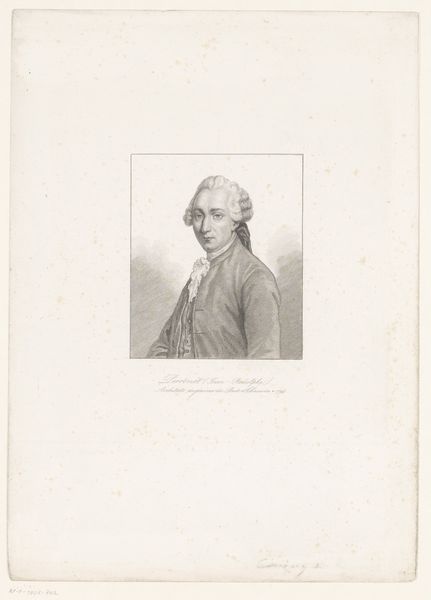
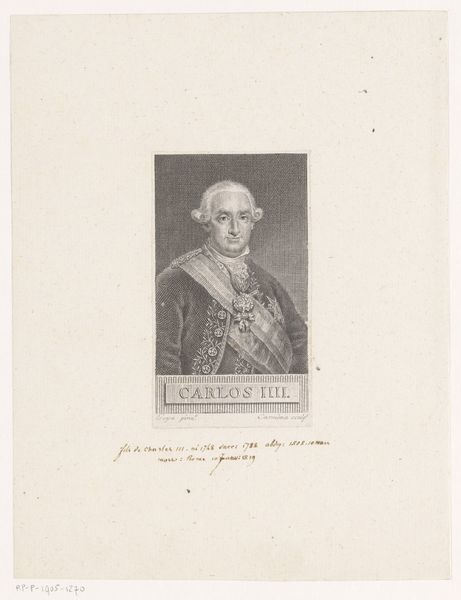
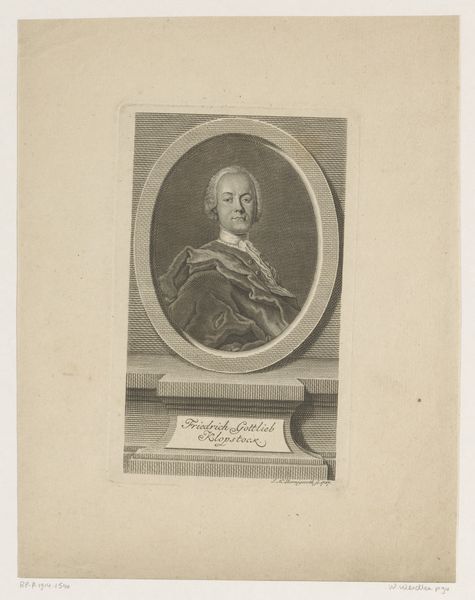
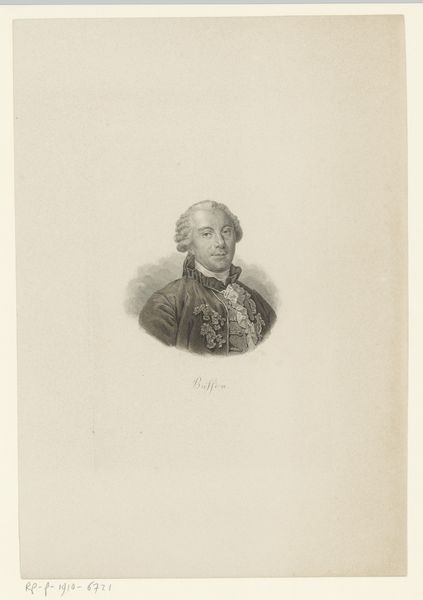
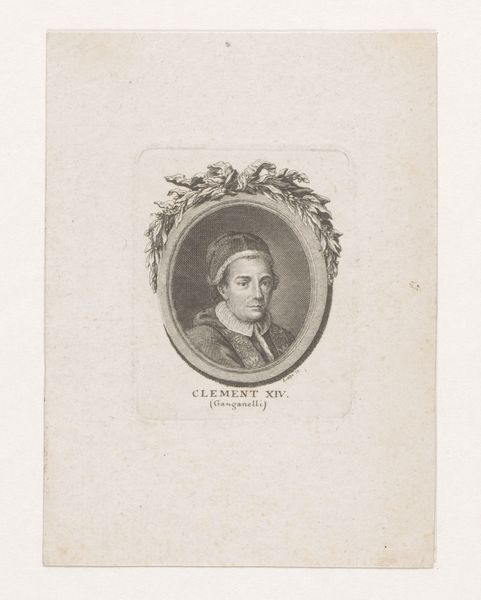
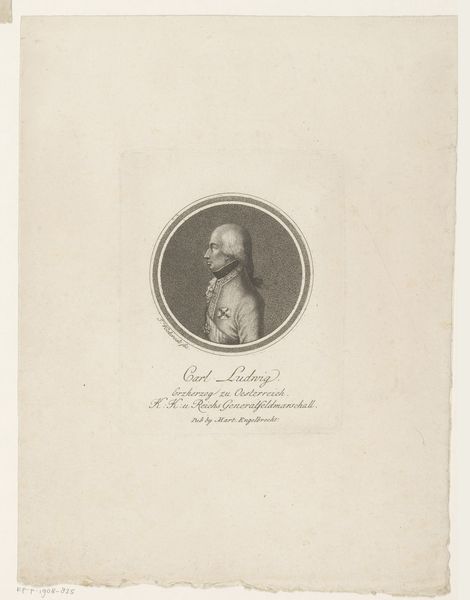
Editor: So, here we have "Portret van Adrian von Riedl," an engraving created sometime between 1769 and 1842 by Johann Carl Schleich, currently residing in the Rijksmuseum. There’s a starkness to this portrait. It feels like I’m staring directly into a specific moment in the past, caught in amber. What do you see when you look at this piece? Curator: I see the rigid social structures of the time reflected in the sitter’s poised gaze and carefully constructed image. The oval frame itself is a symbol – containment, a kind of visual taxonomy. How does it reflect the cultural memory of leadership or respectability in that period? Editor: That’s interesting, the “visual taxonomy”. Do you mean like, how portraits were used to categorise or present individuals within a certain social order? Curator: Exactly. Think about the attire – the cravat, the coat. What meanings were woven into those textiles and sartorial choices? Clothes act as a coded language, indicating status, profession, and belonging. Even the barest minimum denoted access. Editor: I hadn’t considered the clothing as symbolic on that level. Now I am thinking about that order you mentioned… I wonder about the relationship of image to memory, you know? Did these images seek to project and solidify authority of the subject? Curator: Indeed! Portraits are rarely simple likenesses. They're performative, constructing a lasting image for posterity. We receive it even now, still processing the implications of those signs. This engraving preserves not just a face, but a specific cultural memory. Does seeing it shift how you understood its place? Editor: Definitely! I was so focused on the starkness of the engraving technique itself. Now I understand that every detail within the portrait plays a role in constructing and preserving a certain historical narrative. Curator: And in decoding these visual cues, we learn to read not just the subject, but the society that produced him.