


Curatorial notes
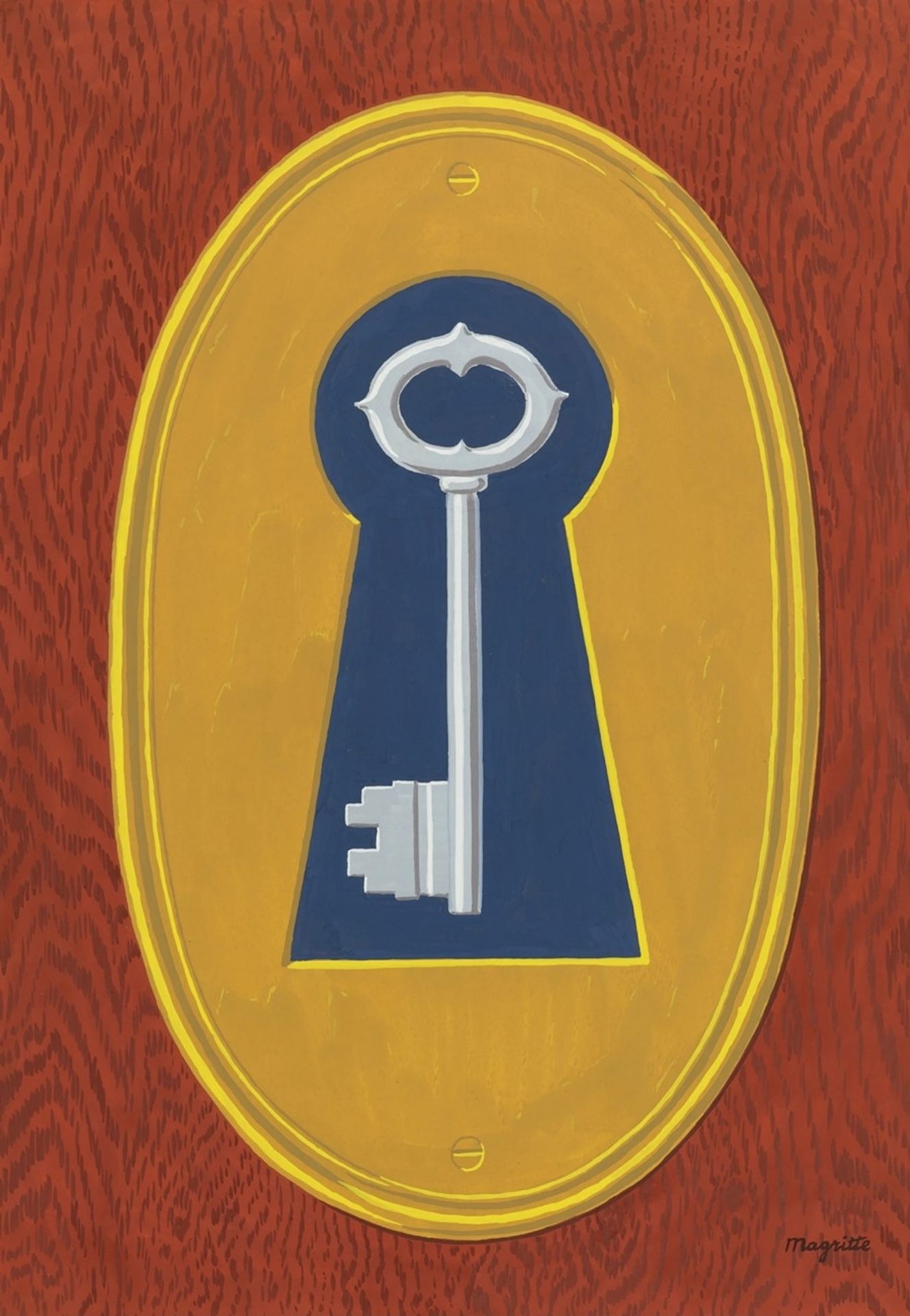
René Magritte created this painting, *Le sourire du diable*, using oil on canvas. Instantly, one's focus is drawn to the detailed depiction of a keyhole, centrally positioned against a wood-grain surface, with a key that impossibly occupies the same plane as the lock. Magritte masterfully uses color and form to create a visual paradox. The muted reds of the wooden paneling offer a stark contrast to the metallic gold and silver sheen of the key and lock. This contrast, combined with the flat rendering of depth, challenges our perception of space. The key itself, while seemingly functional, hangs suspended, its presence more symbolic than practical. This disruption of expected relationships invites us to question the underlying structures that govern our understanding of reality. The painting serves as a semiotic puzzle, where familiar signs are rearranged to destabilize fixed meanings. Notice how the visual elements don’t just depict objects; they function as codes within a larger philosophical inquiry. By disrupting the conventional relationship between object and space, Magritte prompts a re-evaluation of our perceptions.